
|
|
|
|
|
|
|---|---|---|---|---|---|
 |
 |
 |
|---|---|---|
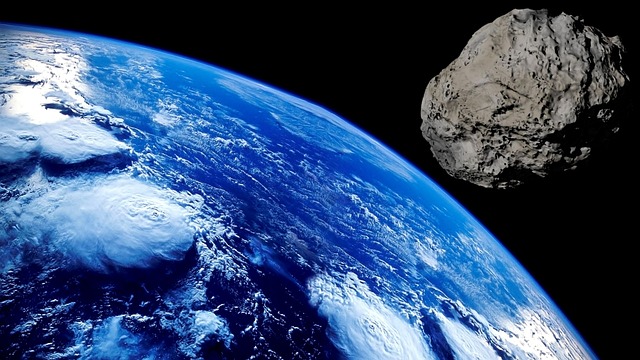
The asteroid Apophis can be steered to hit the Earth and used for geoengineering.
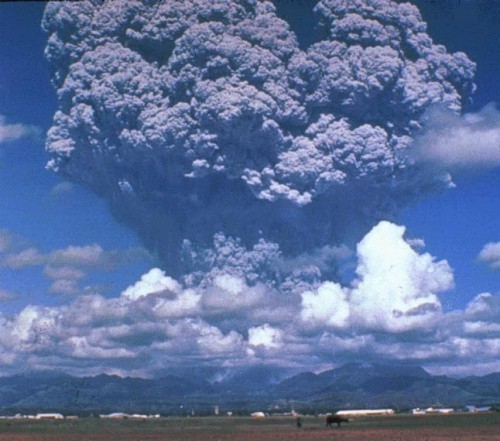
*) It cools the Earth by launching dust and aerosols.
*) The dust fertilizes the oceans and sequesters carbon to the ocean bottom.
*) The crater can strip mine.
Apophis is the size of a football stadium. The impact energy is 100 times that of a fusion bomb and it doesn't make radioactivity. It can trigger a volcano for extra energy.
It takes only a small nudge to make Apophis hit the Earth, easily done with a fusion bomb. Apophis will pass the Earth next in 2029, and the pass after that is 2036.
 |
|---|
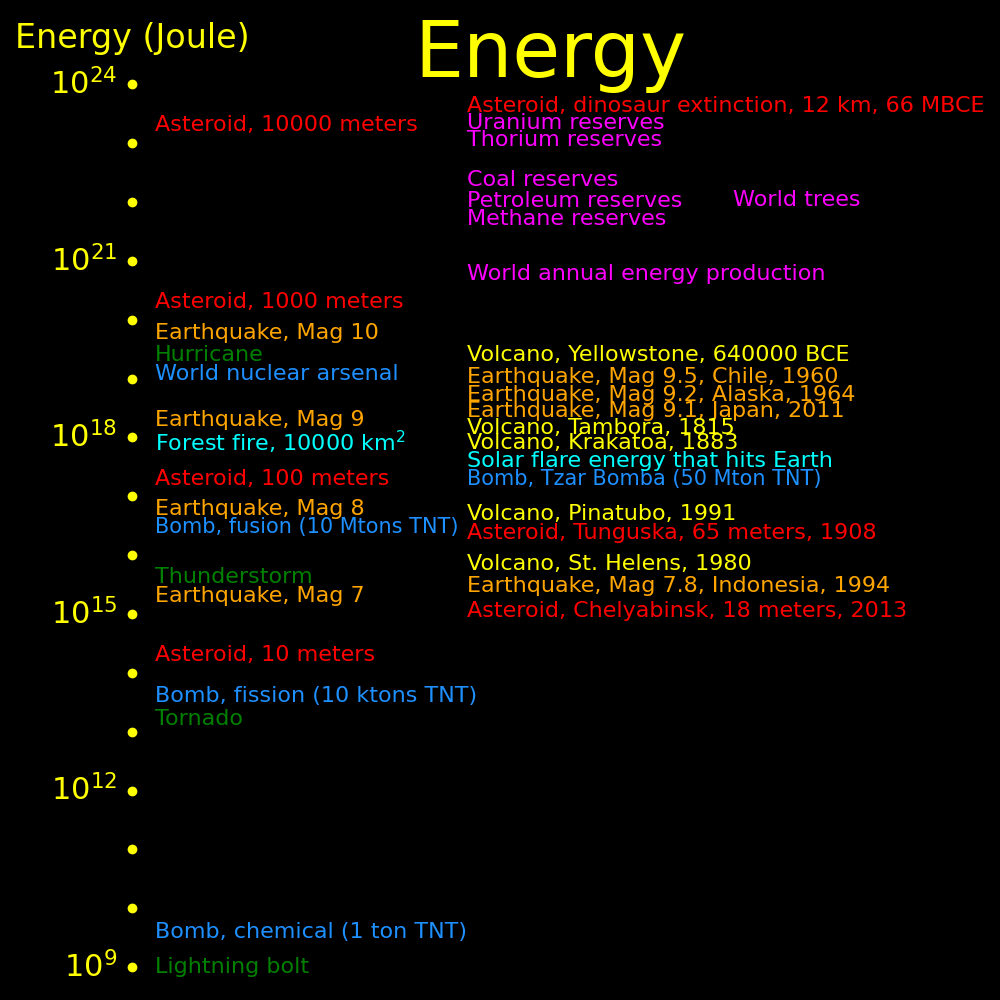
Pinatubo cooled the Earth by .2 Kelvin in 1991.
 |
 |
|---|---|
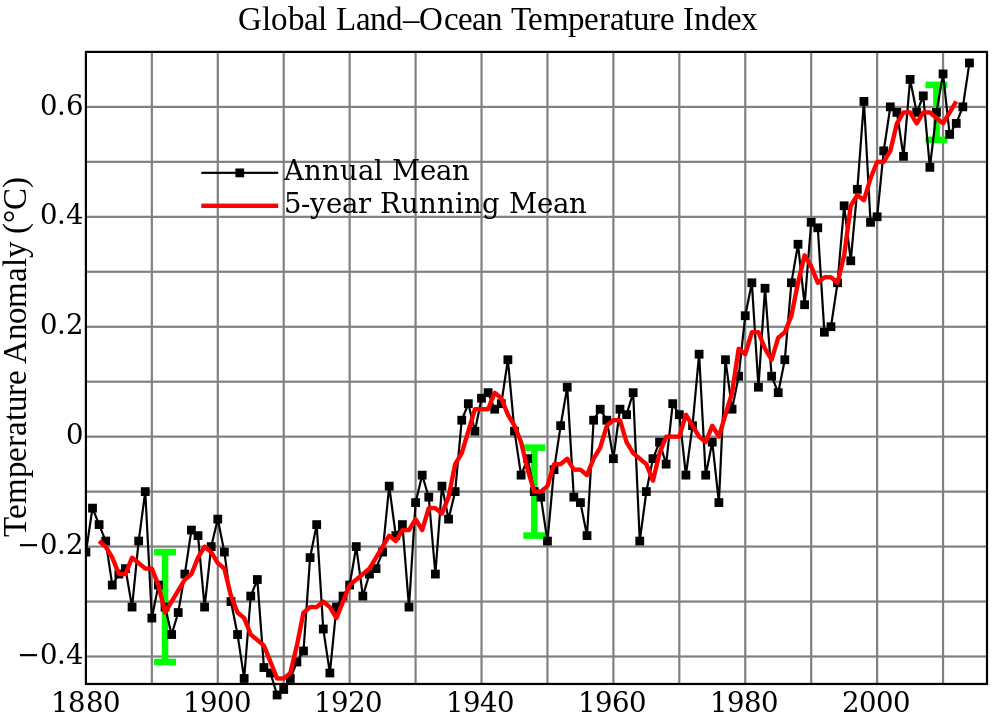
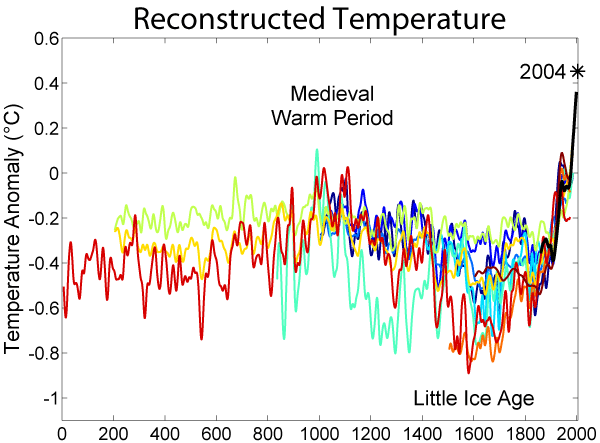
The "medieval warming period" had low volcanic activity.
 |
|---|
The following volcanoes give measurements for temperature change.
              Volcano   Magma  Volcanic  Year   Temp      Energy
                         km3    index         change (K)  Joule

Philippines   Pinatubo      25    6      1991     -.2    5e16
Alaska        Novarupta     28    6      1912     +.2
Guatemala     Santa Maria   20    6      1902     -.1
Indonesia     Krakatoa      20    6      1883     -.4    8e17
Indonesia     Tambora      160    7      1815     -.5    3e18   Caused the "Year without a summer"
Iceland       Laki          14    6      1783    -1
Unknown                           7       535    -2
 |
 |
|---|---|
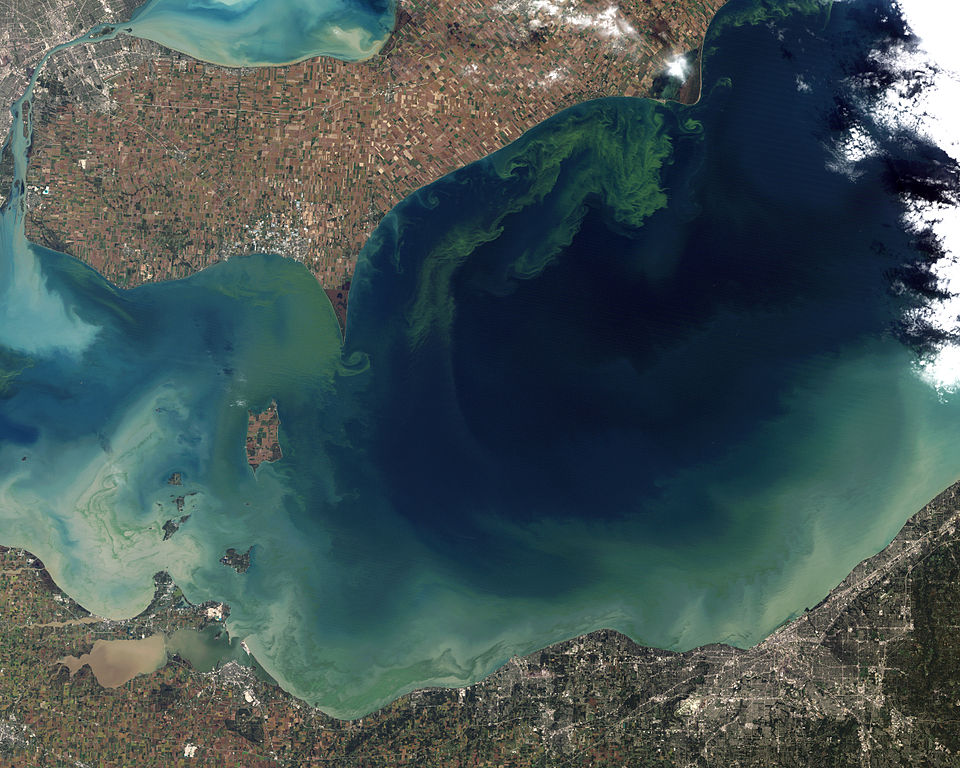
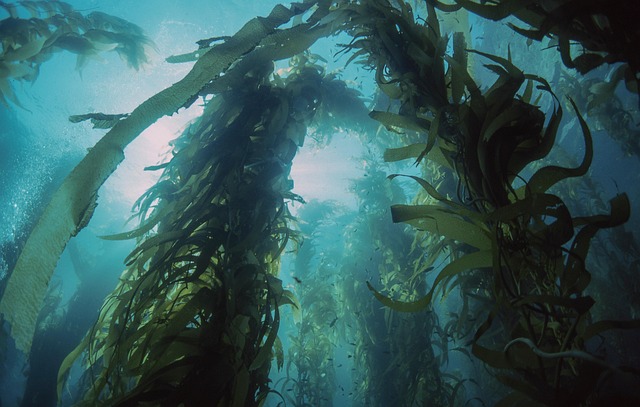
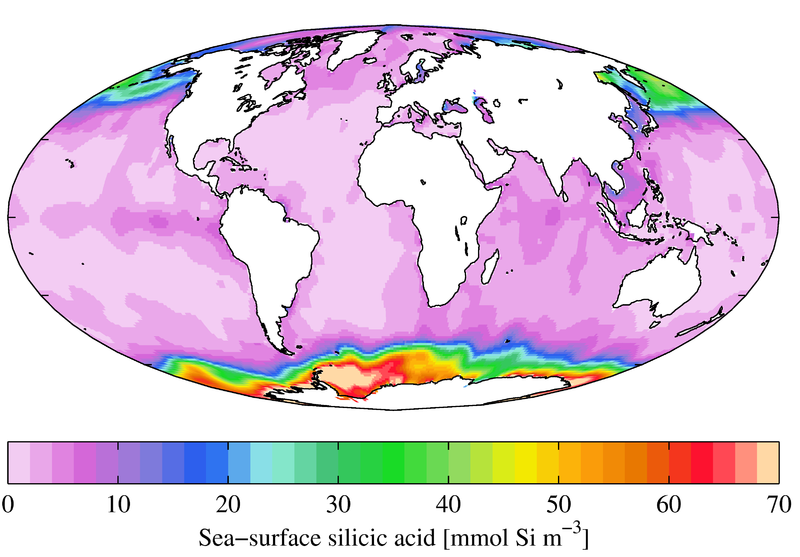
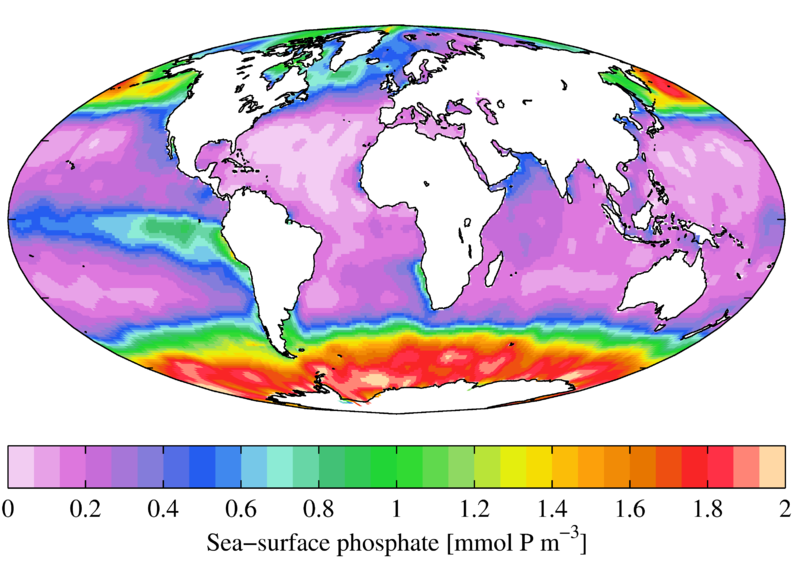
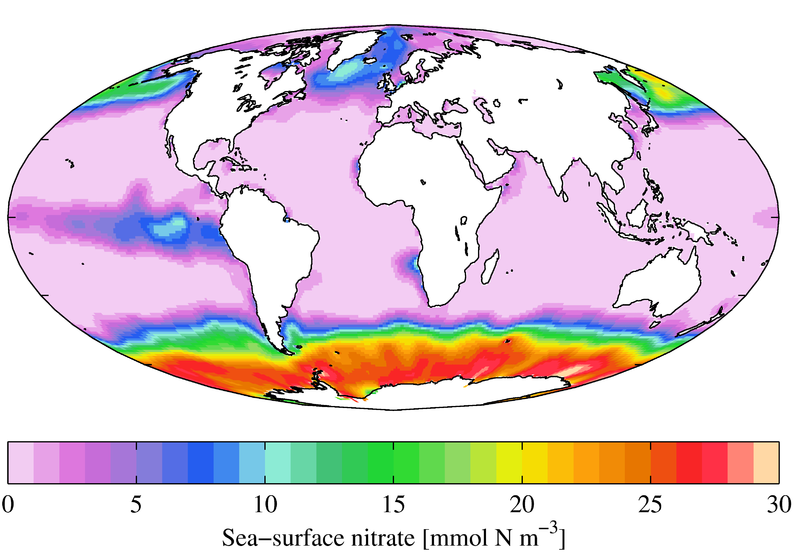
Adding nutrients to oceans promotes biomass. Divide nutrients into micronutrients (metals) and macronutrients (phosphorus, silicon, etc). Micronutrients can be added cheaply. For macronutrients, you need an explosion to launch dust. The explosion can come from either a nuclear bomb, a volcano, or an asteroid. An asteroid can trigger a volcano.
       Dry plant   Ocean   Ocean  Crust     Cost    Cost  Crust/  Soluble   Nitrogen   Photo-
          ppm     deplete   ppm    ppm      $/kg     $    plant   fraction  fixation  synthesis

Silicon        0     .02   2.2    282000        .1   5000    5.6    .05                  Diatoms have 50000 ppm silicon
Phosphorus   810     .05    .06     1050       5.4   4400    1.3    .33
Nitrogen   13000     .1     .05       19       2.0  26000    0

Zinc          30     .02    .0049     70       2.7     81    2.3    .4
Iron         200     .15    .002   56300        .8    160  282      .10      *
Selenium       5     .25    .0002       .050  22      110    0
Nickel         1     .25    .001      84      16       16   84      .4
Copper         5     .25    .00025    60       7.1     36   12      .4                *
Iodine          .3   .6     .06         .45   35       10    1.5
Vanadium        .25  .8     .0025    120      28        7  480      .5       *           Toxic if overconcentrated
Molybdenum     1    1       .01        1.2    26       26    1.2             *
Manganese     60    2       .0002    950       2.2    130   16      .35               *
Cobalt          .5  3       .00002    25      33       16   50               *

Carbon    450000     .85  28         200       0        0     .0004
Boron         10    1      4.44       10       3.7     37    1
Sulfur      1500    1    905         350        .10   150     .23
Calcium     5000    1    412       41500        .1  11500    8.3
Potassium  50000    1    399       20000       2.9 145000     .4
Magnesium   2200    1   1290       24000       2.5   5500   11               *
"Crust/Plant" is the ratio of crust concentration to plant concentration.
"Ocean deplete" is the ratio of surface concentration to average concentration, and indicates how stressed the nutrient is.
The bottom group (Carbon through magnesium) are elements that are abundant in the ocean and don't need to be fertilized.
The top group is macronutrients and the middle group is micronutrients (metals).
"Soluble fraction" is for dust that falls in the ocean and is the fraction of the element in the dust that dissolves.
Silicon isn't required for life, but if it's abundant, diatoms use it for cell walls. It takes more energy to make a carbon cell wall than a silicon cell wall.
Selenium is mined at 3 Mkg/year. If it's used for ocean fertilizer, the demand will exceed this. The price won't go up because selenium is extracted from sulfur. All other fertilizer elements have abundant supply.
Data: Periodic table of ocean elements
The chief nitrogen fixing nutrient is molybdenum, so spike the ocean with moly.
Iron is also necessary for nitrogen fixation.
Vanadium can fix nitrogen, but moly is better. Vanadium isn't needed if moly is present. Vanadium is also toxic at high concentration.
Cobalt can fix nitrogen and is present in legumes. But if moly is present, cobalt isn't needed.
The most bioavailable form of molybdenum is molybdenate MoO4--.
 |
|---|
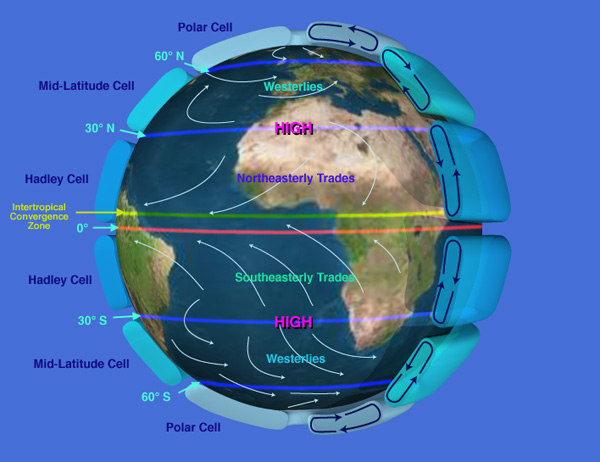
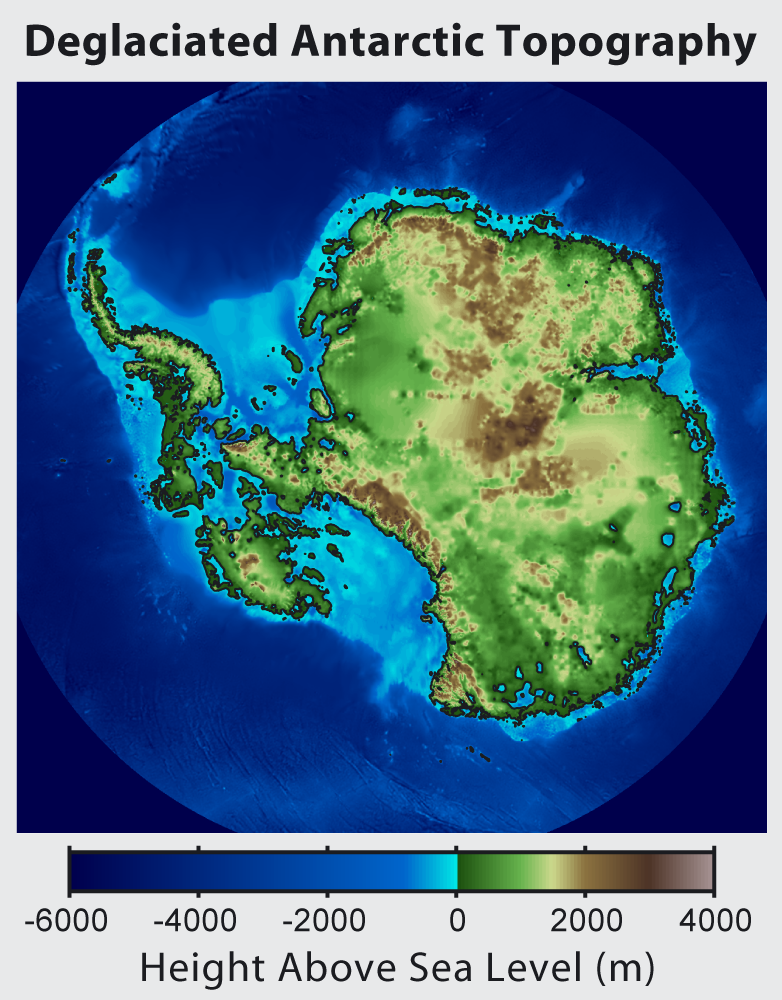
A dust cloud in the Antarctic tends to stay in Antarctic because of Hadley cells. The dust can be localized to a part of the Earth that's lightly inhabited.
 |
|---|
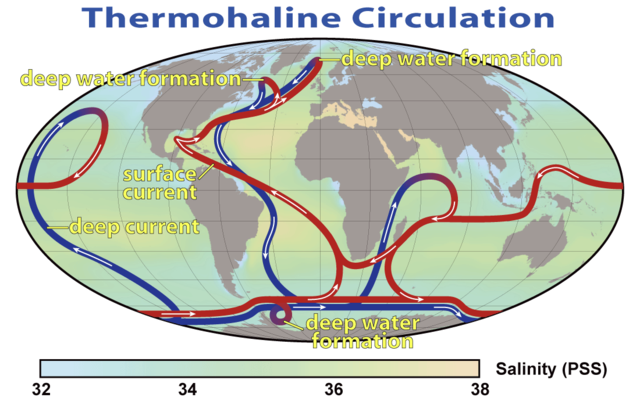
A current rings Antarctica. The chief downwelling zone is in the Atlantic sector. Diatoms can capture carbon and then currents send the carbon to the bottom of the ocean.
The thermohaline circulation time is 1000 years.
 |
|---|
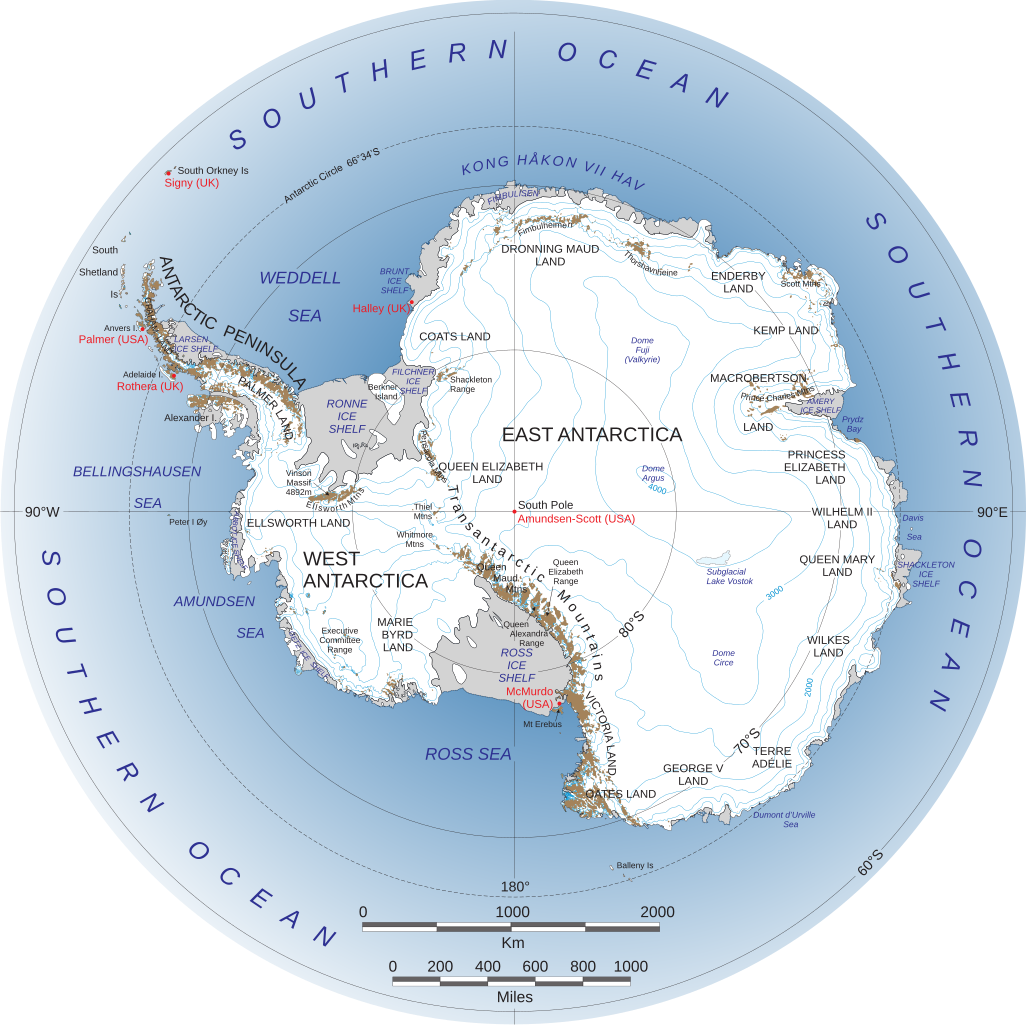
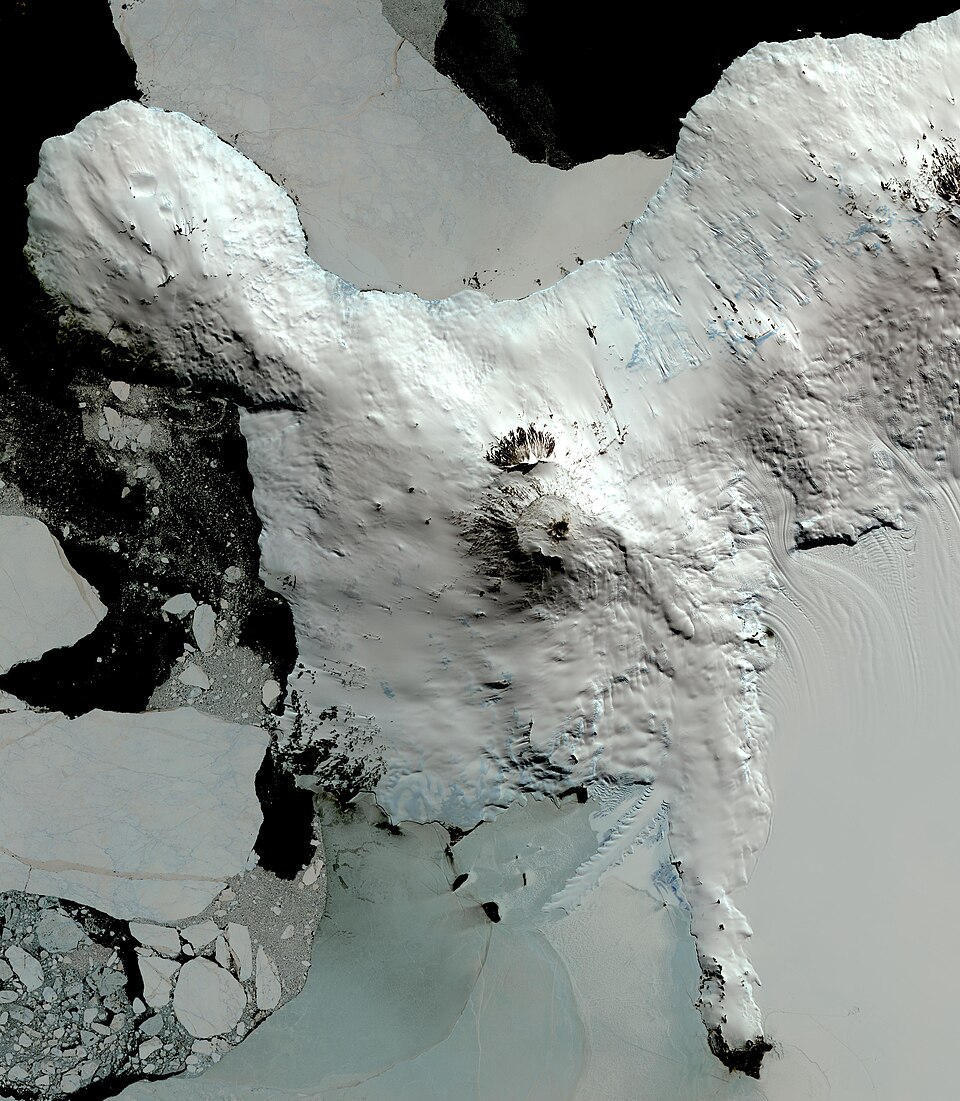
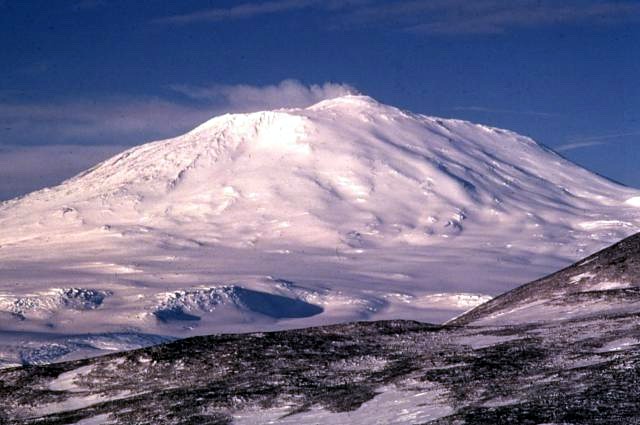
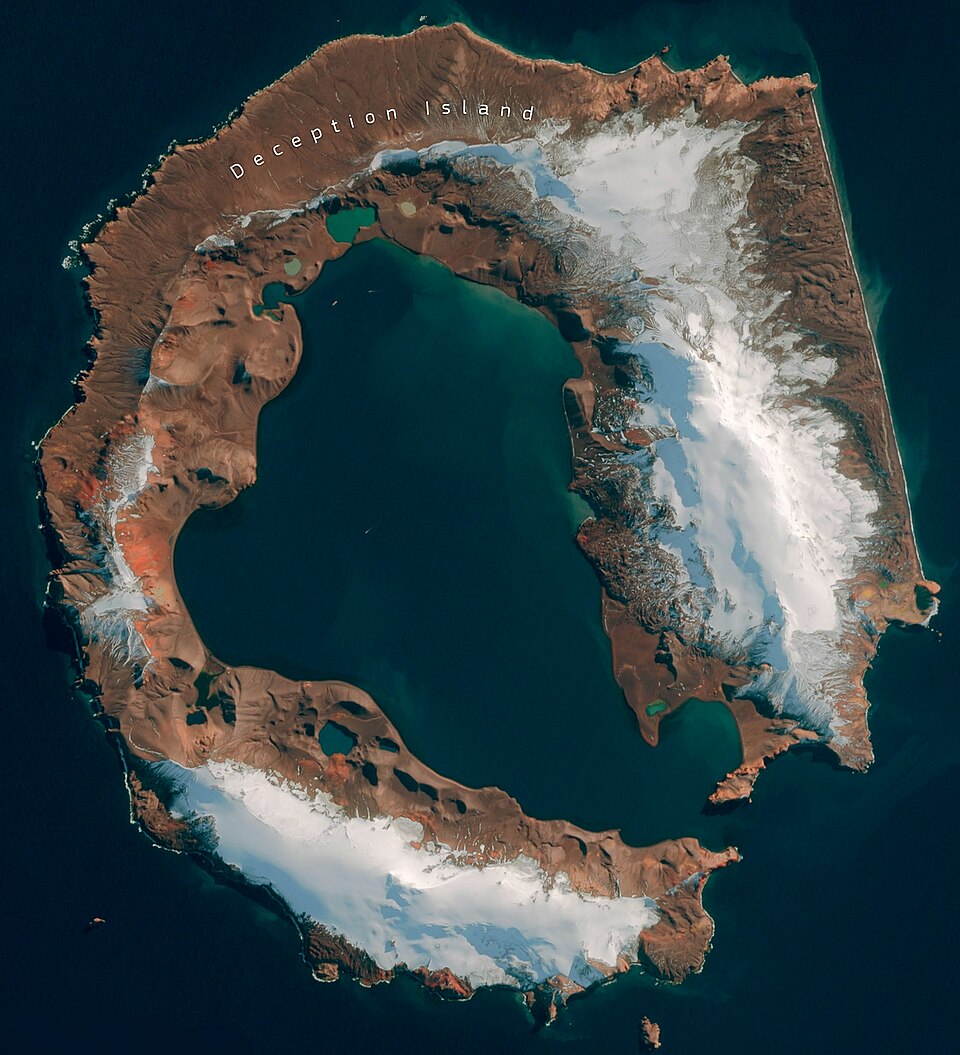
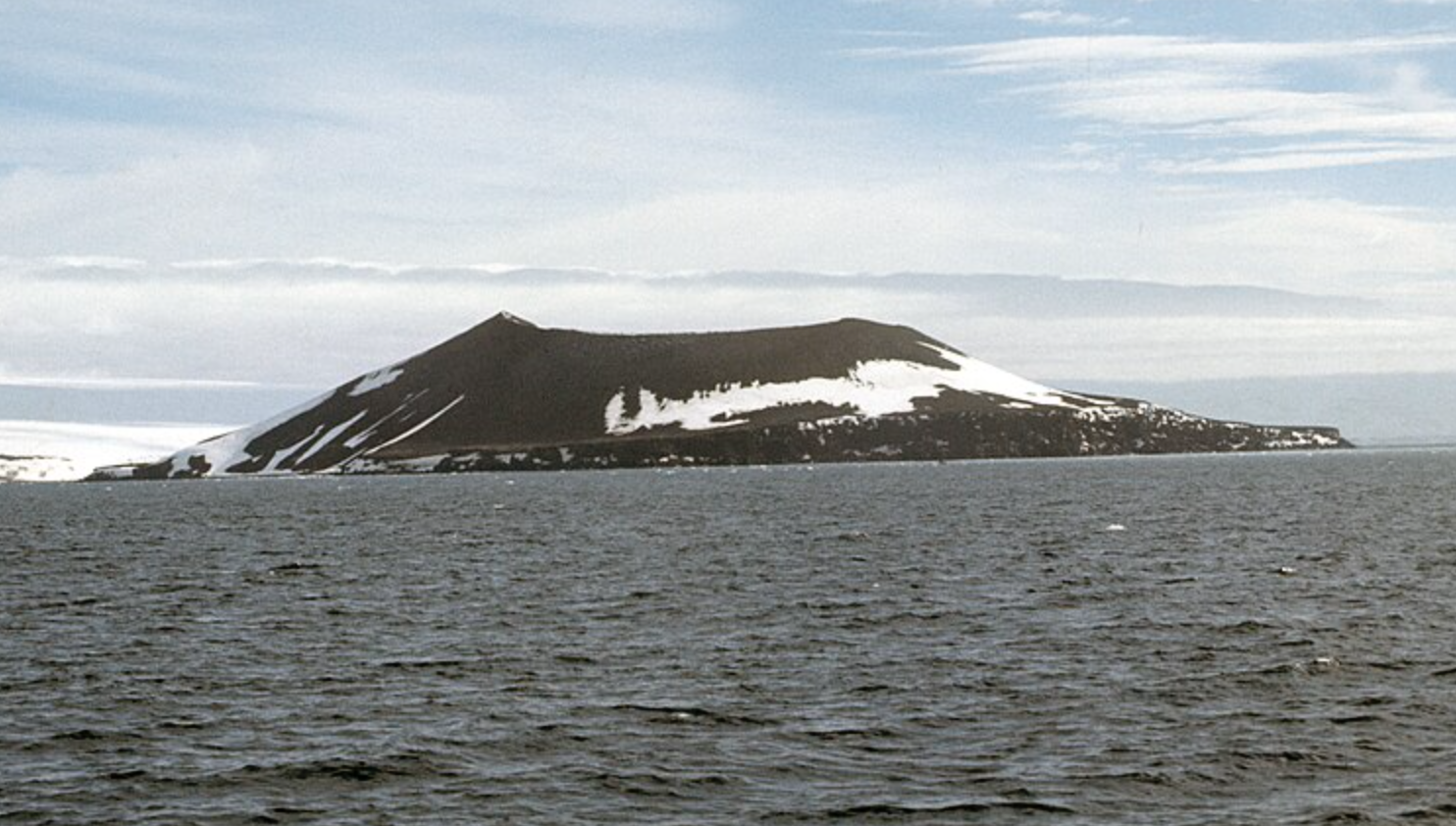
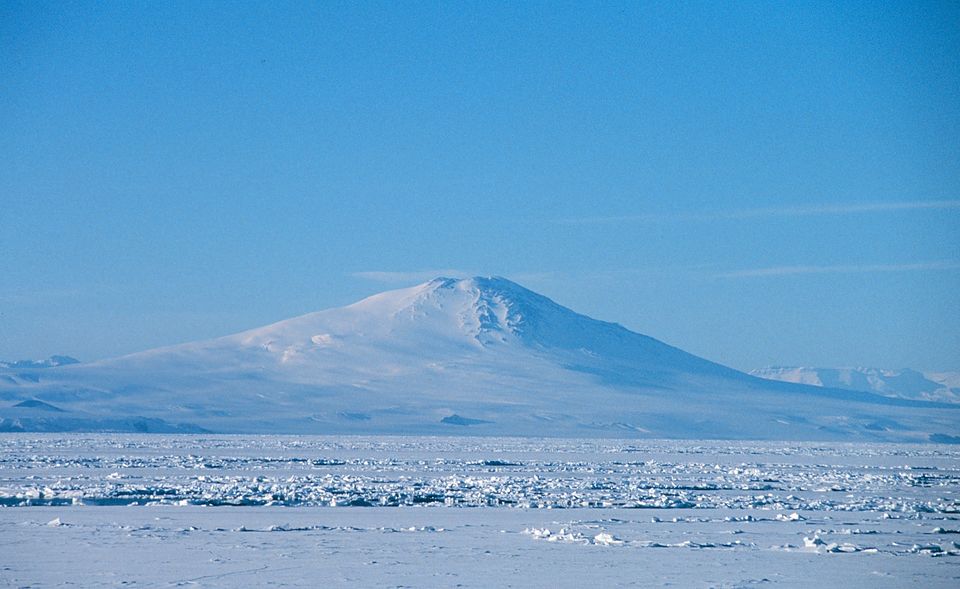
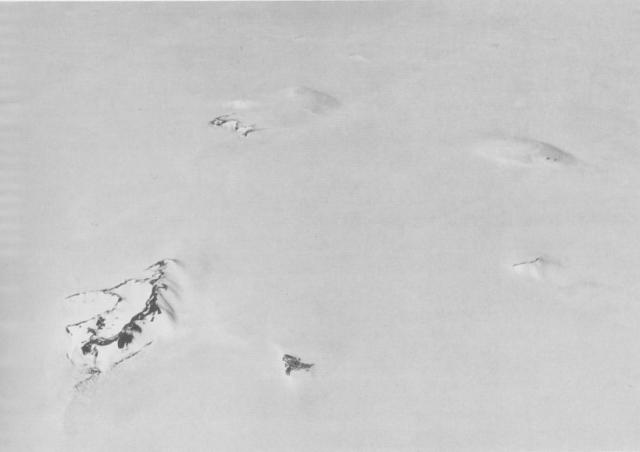
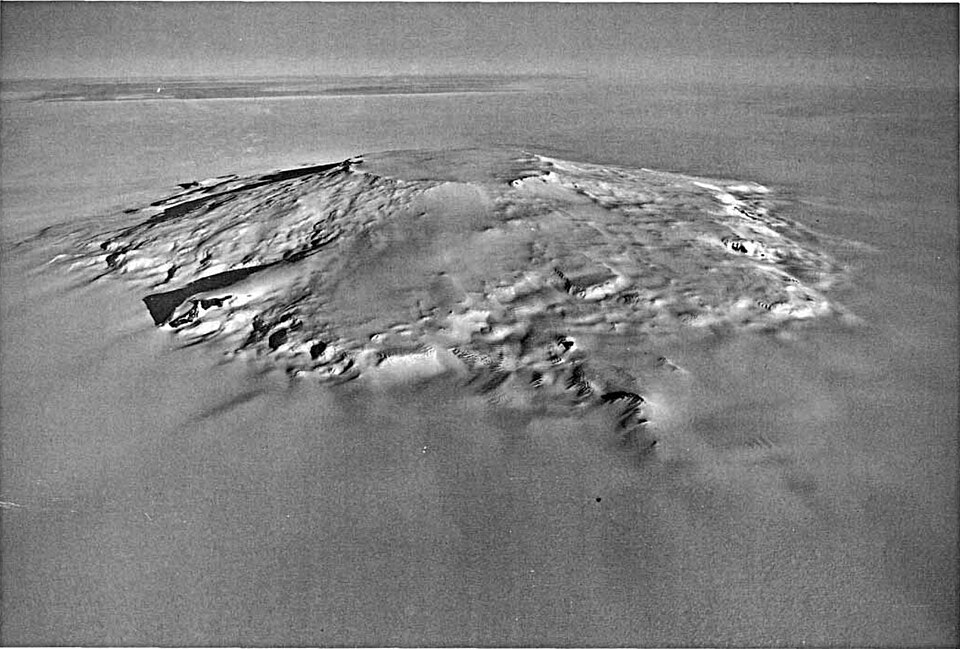
A volcano can amplify an explosion. Antarctica has active volcanoes, the most active being Mount Erebus.
 |
 |
 |
|---|---|---|
 |
 |
 |
|---|---|---|
 |
.jpg) |
|---|---|
                   Last eruption

Mount Erebus         2018
Deception Island     1970
Penguin Island       1905
Mount Melbourne      1892
Mount Rittman        1252
Hudson Mountains     -210
The Pleiades        -1050
Mount Takahe        -5550
Mount Berlin        -8350
 |
|---|
 |
|---|
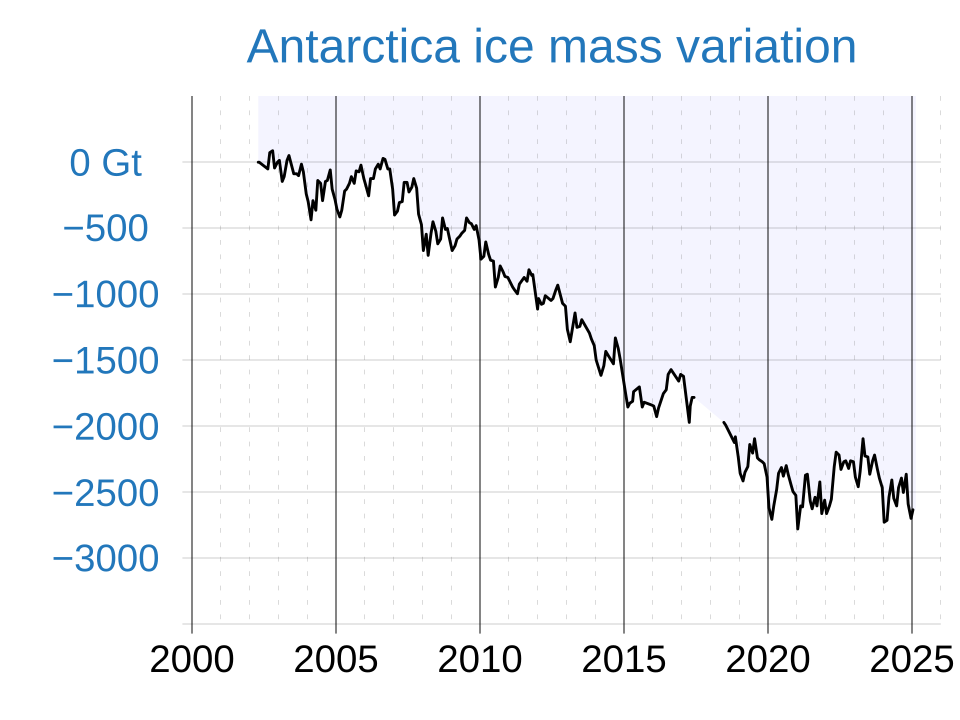
There is a narrow canyon in Queen Maud's land that can be dammed with a nuke or asteroid. The ice flow through the canon is on the order of 100 km3/year. 1 mm of ocean level is 360 km3 of water.
The Amery glacier can also be dammed, although the Queen Maud canyon is a better candidate.
For a megathrust earthquake, between .1 and 1% of the earthquake energy becomes tsunami wave energy.
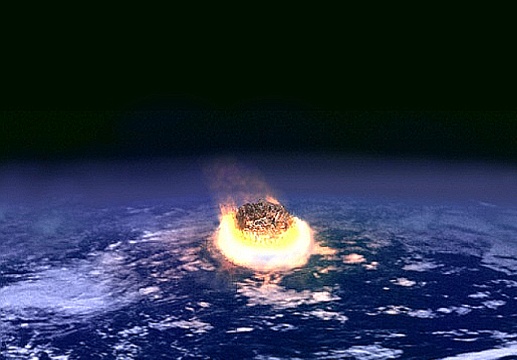
A fusion bomb can cause a dangerous tsunami. You don't want an asteroid hitting the open ocean. You want it to hit land.
                   Magnitude  Earthquake  Tsunami  Tsunami   Year
                    Richter     Joule      Joule   fraction

Japan, Tohoku            9.0    2.0e18     3.0e15   .0015    2011    Fukushima nuclear disaster
Chile, Offshore Maule    8.8    1.0e18                       2010
Indonesia, Sumatra       9.1    2.8e18     2.1e16   .0075    2004
Alaska, Anchorage        9.3    5.6e18     6.0e14   .00011   1964
Chile, Valdivia          9.5   11.2e18                       1960    Largest quake in recorded history
Pacific Ocean, Cascadia  9.0    2.0e18                       1700
A fusion bomb makes dust, which goes into the oceans and adds 1 Bkg of phosphorus. Aphophis has the energy of 100 fusion bombs. The phosphorus in ocean plants is 6 bkg.
For oceans,
Plants                      =   6000     Bkg
Plankton                    =   1900     Bkg
Animals                     =  30000     Bkg
Zooplankton                 =  14400     Bkg
Crustacian                  =   4800     Bkg
Fish                        =   4200     Bkg
Fish capture                =    120     Bkg/year
Squid                       =     55     Bkg
Whale                       =     40     Bkg
Dolphin                     =      7     Bkg
Seal                        =      6     Bkg
Biomass concentration       =     17     ppb

Plant phosphorus fraction   =       .0003
Plant phosphorus            =      6     Bkg

Crust phosphorus fraction   =       .00105
Fusion bomb ejecta          =   1000     Bkg       A bomb with 10 MTon TNT equivalent of energy
Phosphorus in ejecta        =      1     Bkg

Natural dust going into oceans= 1200     Bkg/year
 |
|---|
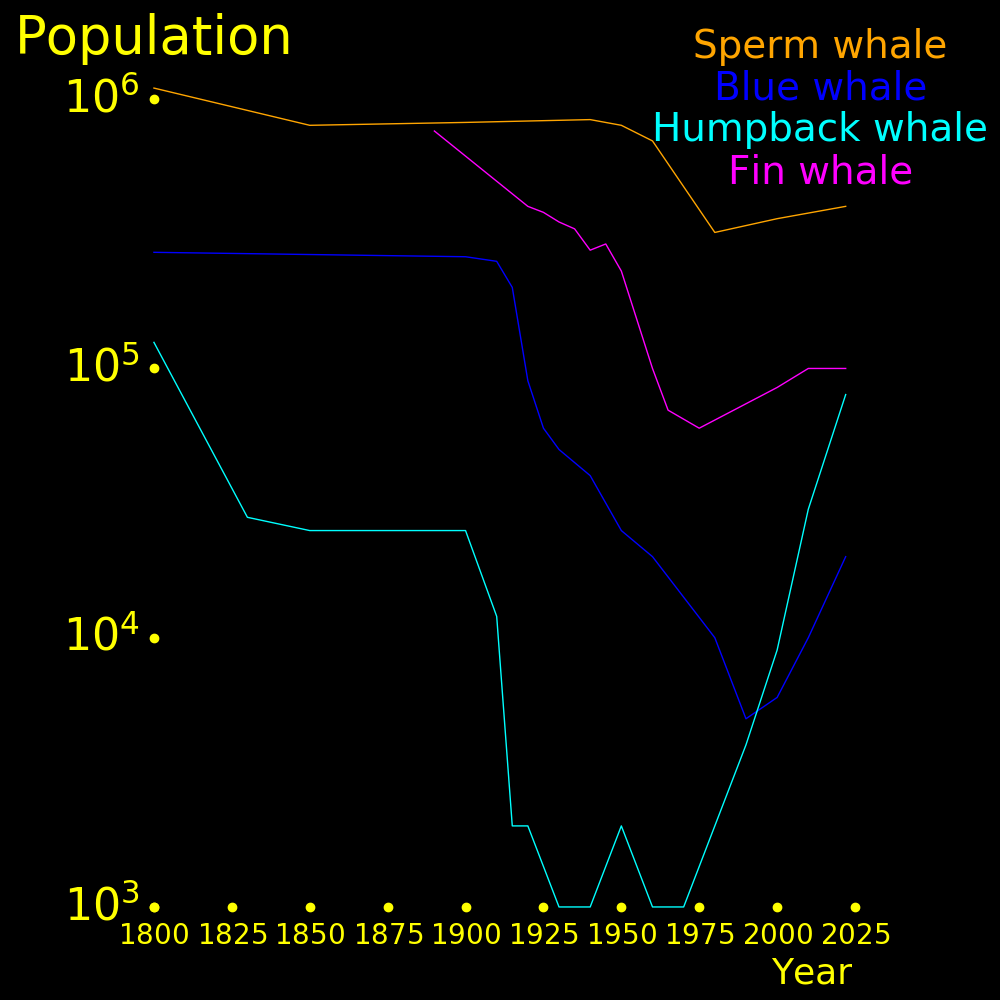
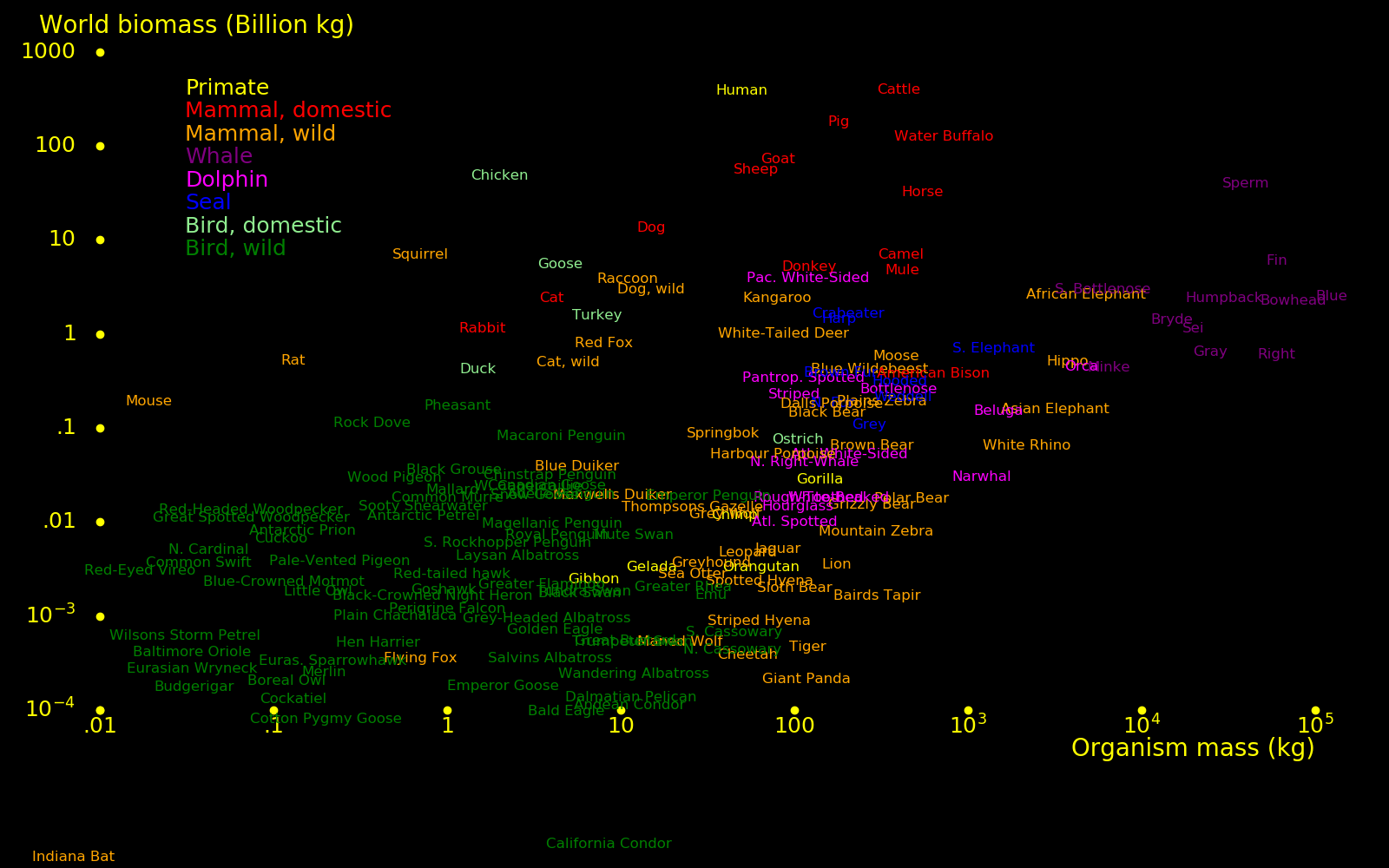
Ocean animal biomass exceeds plant biomass. Whales dominate ocean mammal biomass.
 |
|---|
 |
 |
|---|---|
Hydrogen bombs are the best way to deflect asteroids. We should have bombs in space ready to go if an asteroid is found. We also need wide-angle telescopes to detect asteroids, like the Rubin telescope.
Suppose you bomb an asteroid. The goal is to maximize momentum delivered to the asteroid, which means ejecting as much mass as possible from the asteroid.
Ejecta energy      =  Ee
Ejecta mass        =  me
Ejecta momentum    =  Qe  =  (2 me Ee)½
If you have enough time to land on the asteroid, bury the bomb as deep as possible. If you don't, then settle for putting the bomb on a glancing collision course with the asteroid and detonate it just before it hits. The mass ejected can be increased by hitting the asteroid with a pre-impactor, to launch material into space which is then heated by the bomb.
The ejection speed should be slow, to maximize mass ejected, but it should larger than the escape speed. We usually set it to be 3 times the escape speed. The relationship between momentum and energy is
Ejecta speed       =  ve
Ejecta momentum    =  Qe  =  2 Ee / ve
 |
|---|
A mass can be launched from Earth to impact the asteroid and give it a glancing blow to deflect it sideways. The fact that the asteroid is already moving toward Earth adds to the impact speed.
For an impact crater, the ejected momentum tends to have the same magnitude as the impactor momentum.
The asteroid Apophis is moving toward Earth at 6 km/s.
We calculate the minimum mass of the impactor, using Apophis as an example.
Asteroid mass                            =  M
Asteroid sideways deflection distance    =  X                =    10    Mmeter            Size of Earth
Time before asteroid hits Earth          =  T                =    10    Msecond           3 months
Asteroid min sideways deflection speed   =  V  =  X/T        =     1    meter/second
Asteroid distance from Earth when hit    =  L
Impactor mass                            =  mi
Impactor speed                           =  vi               =     6    km/s
Impactor momentum                        =  Qi =  mi vi
Ejecta momentum                          =  Qe =  Qi
Required deflection momentum to asteroid =  Q  =  Qe  =  M V
Impactor mass requirement                =  mi >  M V / vi
Ejecta energy is typically much less than impactor energy.
Impactor energy                          =  Ei  =  ½ mi vi2
Ejecta energy                            =  Ee  =  ½ me ve2 =  Ei ve / vi
 |
|---|
If there is insufficient time to deflect the asteroid, then destroy it. This means gravitationally unbinding it. It still hits the Earth but in pieces. This makes a big difference for tsunami.
If an impactor intercepts an asteroid, we calculate the mass required to unbind the asteroid.
Asteroid radius             =  R                         =   1000    meter
Asteroid density            =  D                         =   3200    kg/meter3
Asteroid mass               =  M  =  4/3 π D R3          =     13    Tkg
Asteroid gravitatioal energy=  Eg =  3/5 G M2 / R        =      7.2  TJoule
Asteroid escape speed       =  v  = (8/3 π G D)½ R       =      1.34 meter/second
Ejection speed factor       =  f  =                      =      3
Ejection speed              =  ve  =  f v                =      4.02 meter/second
Ejection mass               =  me
Impactor mass               =  mi
Impactor speed              =  vi                        =      6    km/s
Impactor momentum           =  Qi =  mi vi
Ejection momentum           =  Qe =  me ve  =  Qi
Ejection energy             =  Ee  =  ½ me ve2  =  ½ me ve vi
Impactor mass               =  mi  =  16/15 6-½ π2 G½ D3/2 vi-1 R4  =  1.06e9 (R/1000)4  kg
If the asteroid is large, it's easier to deflect than destroy. If small, it's easier to destroy than deflect. The astroid radius for which the impactor mass required is the same for cases is:
Asteroid radius = R = 5/12 (3/π)½ (GD)-½ f X/T = 2640 X/T meter
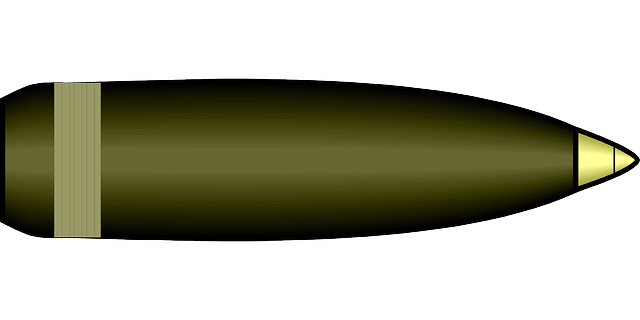
First, cameras arrive and pass by the asteroid and survey. Have at least 4 cameras, one passing over the top, one over the bottom, and 1 passing by each side.
The cameras don't slow down so that they can get to the asteroid fast.
A set of impactors arrives just before the cameras and hits a diverse set of spots on the asteroid. Cameras observe.
A second wave of cameras slows down and parks at the asteroid. Then another set of impactors hits and cameras observe. Impact spots are informed by the first wave of observations.
 |
 |
|
|
|
|---|---|---|---|---|
 |
 |
|---|---|
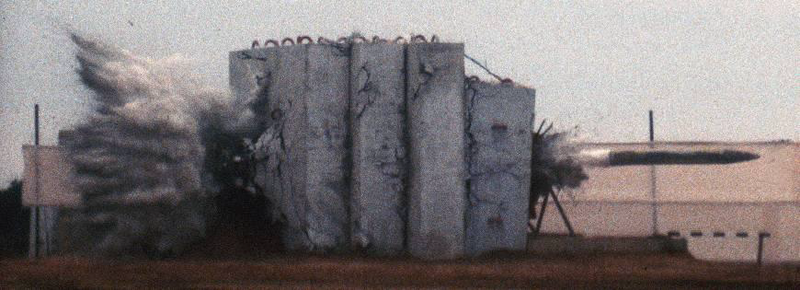
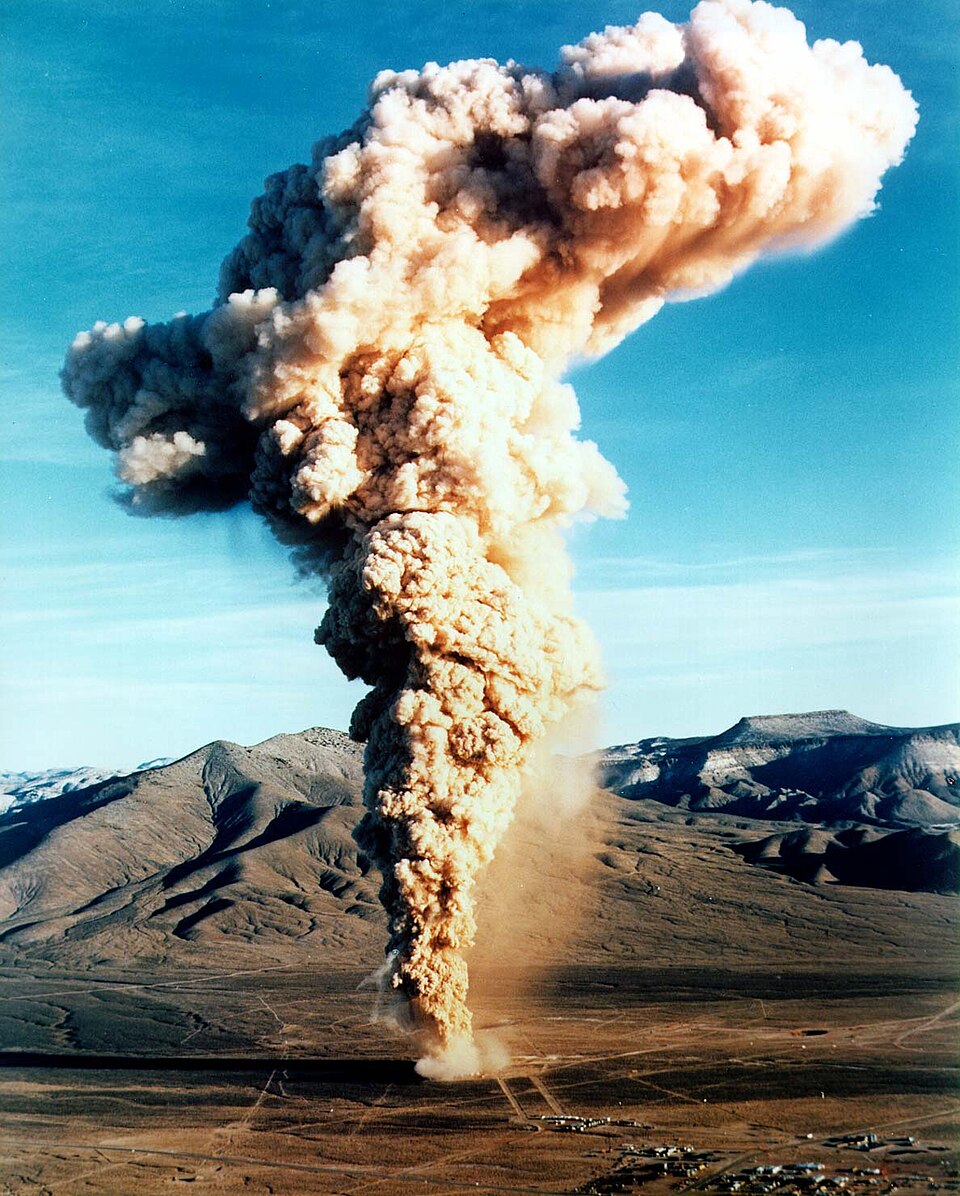
For a meteor impact, only a small fraction of the incoming kinetic energy becomes ejecta kinetic energy. It may be possible to improve the ejecta energy by tamping, like a gun barrel.
If you sent a nuke to an asteroid, have pre-impactors make a hole. Send the nuke down the hole and detonate it at the bottom. You can have post-impactors that close the hole after the nuke goes in.
For a gun, bullet energy is 1/3 powder energy. This is the limit on what the buster strategy can do.
 |
|---|
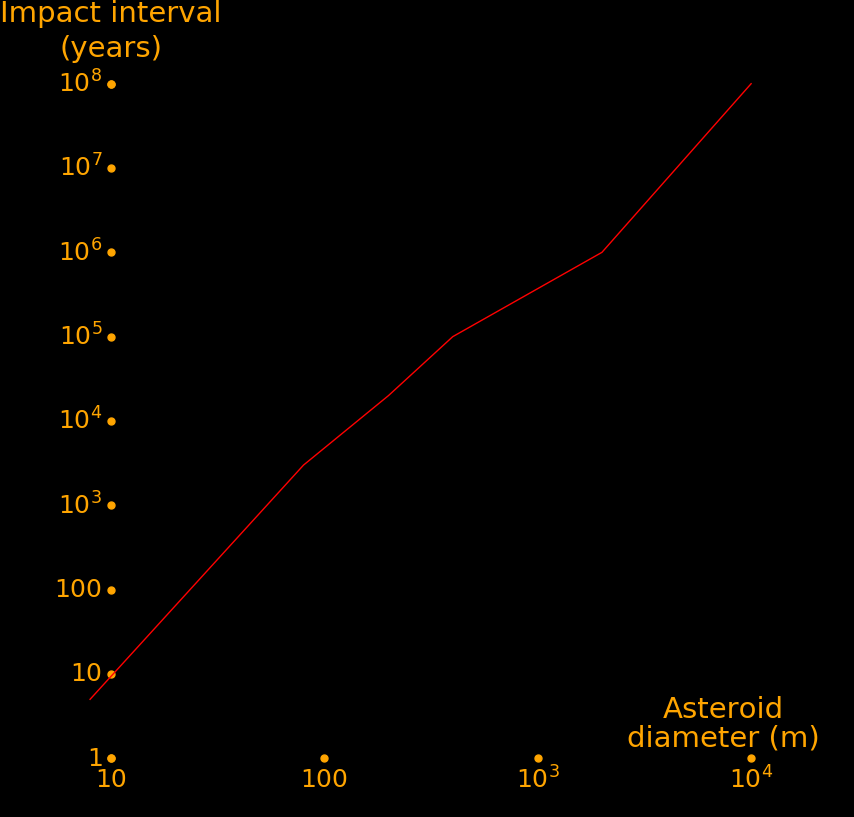
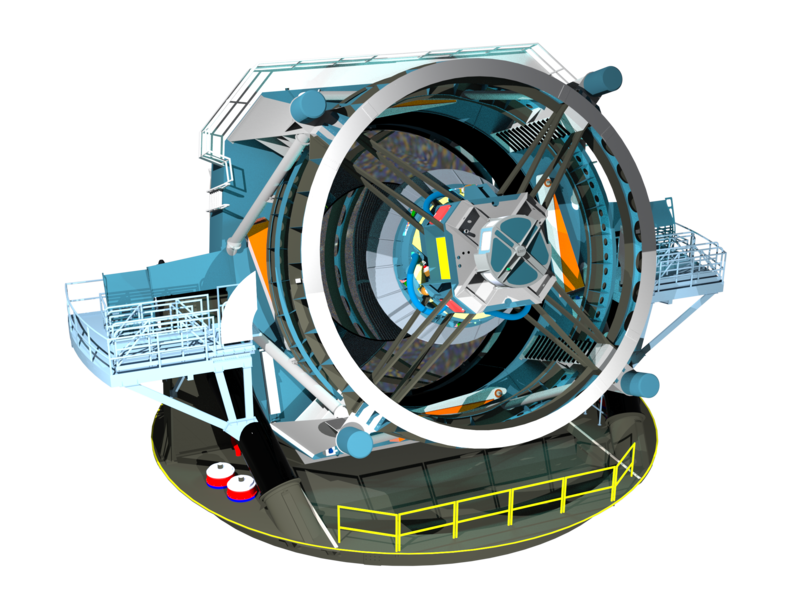
The smallest asteroid capable of penetrating the atmosphere is 50 meters. Such an asteroid has the energy of a 10 Megaton fusion bomb. The minimum for creating a megatsunami is 200 meters. The LSST telescope will find all 200 meter and larger asteroids that are in near-Earth orbits, and hydrogen bombs can redirect any that will impact the Earth. For asteroids from more distant regions of the solar system it won't find them soon enough to deflect them. For this we need more powerful telescopes.
The following table shows impact damage as a function of asteroid size.
Asteroid   Energy    Tsunami   Crater    Impact   Equivalent energy
diameter             height   diameter  interval
 meters    EJoules   meters      km      years

     8         .0001     0       0           5    Fission bomb, 25 kton TNT equivalent
    80         .100      0       1        3000    Fusion bomb, 25 Mton TNT equivalent
   200        1         10       3       20000    Krakatoa Volcano, 1883
   400       10         20       5      100000    Mag 9.5 quake. Chile, 1960.
  2000     1000        200      40     1000000    Hurricane
 10000   100000       4000     200   100000000    Asteroid that killed the dinosaurs
1 EJoule = 1018 Joules.
 |
|---|
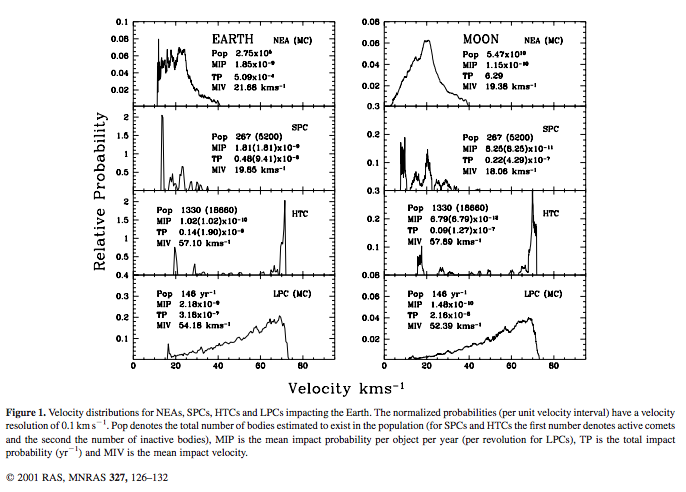
Near Earth asteroids (NEA) approach the Earth at a characteristic speed of ~ 20 km/s. Retrograde comets can approach the Earth as fast as 75 km/s.
NEA: near Earth asteroids
SPC: short period comets
HTC: Halley-type comets
LPC: long period comets
"Near-Earth object velocity distributions and consequences for the Chicxulub impactor" S. V. Jeffers, S. P. Manley, M. E. Bailey, D. J. Asher, Mon. Not. R. Astron. Soc. 327, 126–132 (2001)
 |
|---|
The Pan-STARRS telescope specializes in finding asteroids. It has a wide field of view and takes short exposures, allowing it to cover the entire sky in 8 days. The upcoming Large Synaptic Survey Telescope (LSST) will cover the sky every 2 days.
Telescope   Diameter   Field of     Exposure    Sky survey    Year
            (meters)   view (deg)   (seconds)   time (days)

Pan-STARRS    3          3.0          60           8          2010    Hawaii
LSST          8.4        3.5          15           2          2021    El Penon, Chile


             Flux limit    Magnitude
             (Watts/m2)    limit

Human eye      3e-11         7
Pan-STARRS     5e-18        24
LSST           2e-18        25
Keck 10 meter  1e-19        28
Hubble         1e-20        31
Webb           5e-22        34
The largest single-stage fusion bombs have an energy in the range of 25 ktons TNT equivalent. Larger bombs can be made with 2-stage desgins but they have similar energy/mass as a single-stage bomb.
Energy of a large fusion bomb=  E  =       =  1017 Joules  =  25 MTons TNT equivalent
Mass of a large fusion bomb  =  M  =       =4000  kg
Fusion bomb energy/mass      =  e  =  E/M  =  25   TJoules/kg   =  6 kTons TNT equivalent per kg
TNT energy/mass              =  z  =       =   4.2 MJoules/kg
Departure from the Earth is done with the Oberth maneuver, which uses the Earth to amplify a rocket impulse. The Oberth maneuver is executed by starting the rocket in an elliptical orbit with the perigee as close to the Earth as possible, and the rocket is fired at perigee. Example numbers:
Earth escape speed    =  Ve =  11.2 km/s
Rocket speed change   =  Vr =   6   km/s
Earth departure speed =  Vd = (Vr2 + 2 Vr Ve)½  =  13 km/s
A substantial fraction of an asteroid's kinetic energy goes into heating the atmosphere. An asteroid 10 km or larger heats the atmosphere enough to cause a mass extinction, such as what happened to the dinosaurs.
Heat capacity of air = 1.0 Joules/kg/Kelvin
Mass of atmosphere = 5.1 kg
Mass of asteroid Speed of asteroid
Heating ~ 40 kelvin * ---------------- * ( ----------------- )^2
10^15 kg 20 km/s
A 10 km asteroid has a mass of 1015 kg.
Q = Radius of closest approach / Radius of Earth

                  Q    Diameter  Date    Energy
                       (meters)         (Mtons TNT)
Chelyabinsk      1.0      19     2013      .44
Tunguska         1.0      50     1908    12         Flattened a forest
Arizona asteroid 1.0      50   -50000    10         1 km crater
1972 Fireball    1.0089  ~ 6     1972               Skimmed the upper atmosphere
2011-CQ1         1.87      1     2011
2008-TS26        1.96      1     2008
2011-MD          2.94     10     2011
2012-KT42        3.26    ~ 7     2004
Apophis          4.9     325     2029   510
2013-DA14        5.35     30     2013
2012-KP24        8.99     25     2004
2012-BX34       10.3       8     2012
2012-TC4        14.9      17     2012
2005-YU55       60.00    400     2005
                              Distance (AU)

2004  December  21              .0096
2013  January    9              .097
2029  April     13  21:46 UT    .000254  =  6.0 Earth radii  =  38000 km
2036  March     27              .31
2051  April     20              .042
Radius               =  170       meter
Density              = 2600       kg/meter3
Mass                 =    5.4e10  kg
Approach speed       =    6.0     km/s
Apohis escape speed  =     .205   m/s
Impact speed         =   12.7     km/s
Impact energy        = 4.4e18     Joule

Fusion bomb, 10 MTon =   4e16      Joule
Earth escape speed   =   11.2      km/s
 |
 |
|---|---|
 |
 |
|---|---|
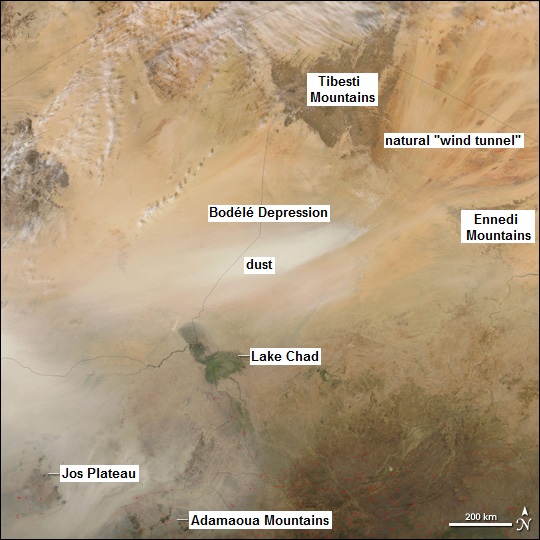
Wind delivers desert dust all over the world.
 |
|---|
Dust produced by the world      = 1200     Bkg/year
Dust produced by the Sahara     =  550     Bkg/year
Dust received by Amazon         =   20     Bkg/year
Iron fraction that dissolves    =     .005              For dust that falls in the ocean

Ocean silicon input            =   340     Bkg/year
Ocean phosphorus input          =     .95  Bkg/year
Ocean zinc input                =     .175 Bkg/year
Ocean iron input                =   32     Bkg/year
Ocean nickel input              =     .086 Bkg/year
Ocean copper input              =     .063 Bkg/year
Most bioavailable form:
Molybdenum MoO4--
Energy to make gravel     =    .003  MJoule/kg
Energy to make sand       =    .008  MJoule/kg
Energy to make dust       =    .02   MJoule/kg
Energy to make micron dust=   4.4    MJoule/kg
Energy to make lava       =   1      MJoule/kg
Energy to make vapor      =  10      MJoule/kg
Energy to throw           =    .01   MJoule/kg

Energy of fusion bomb     =   4e16   Joule

Mass of rock thrown       =4000      Bkg
Mass of rock melted       =  40      Bkg
Rock Phosphorus           =    .04   Bkg

Mass of rock melted       =  33      Bkg
Mass of rock crushed      =4100      Bkg
Mass of crater ejecta     =4000      Bkg/Mton       Experimental result
 |
|---|
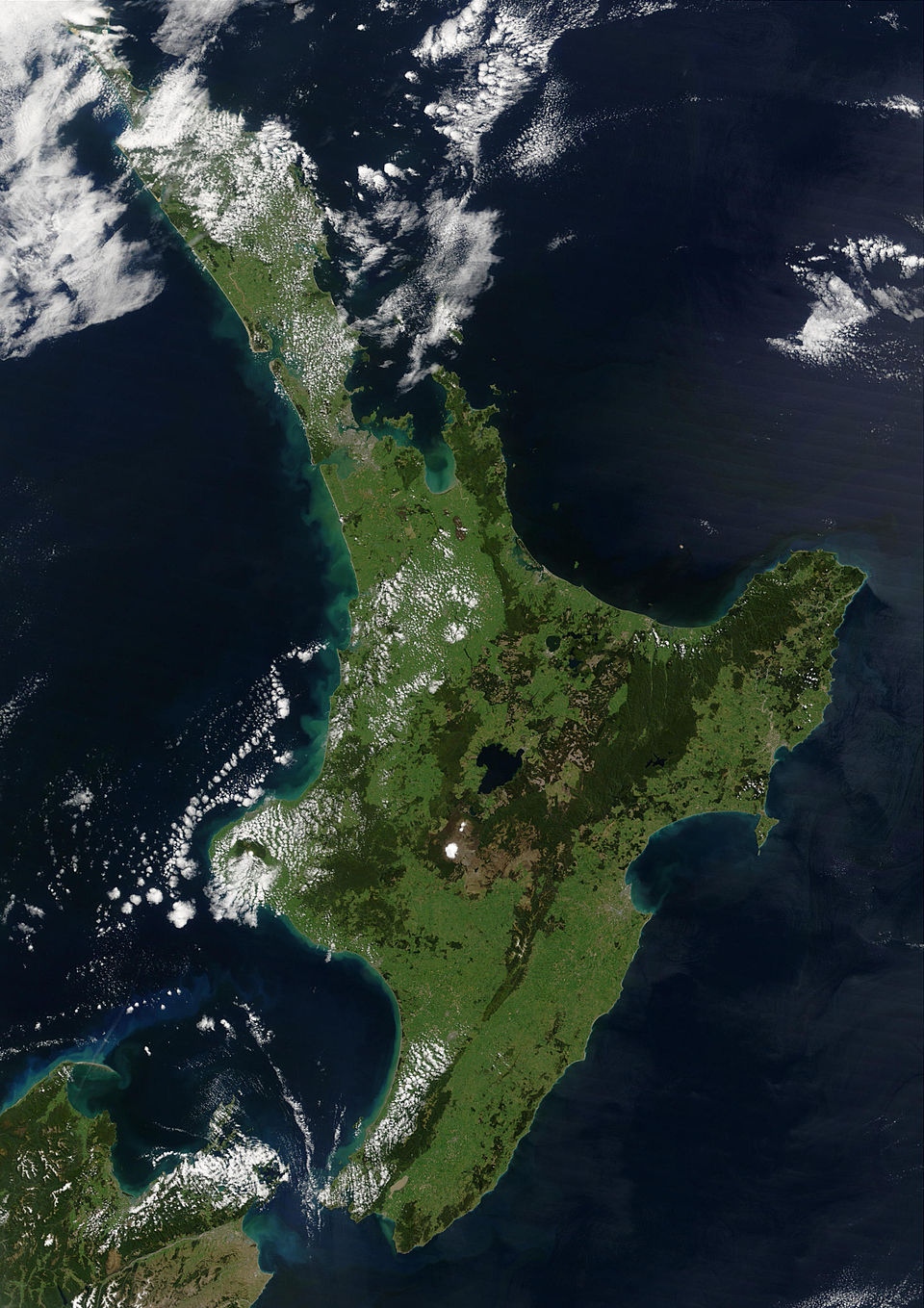
The Taupo volcano is the lake in the center.
 |
|---|